Key Takeaways
- Seated exercises can help make movement more accessible: Many routines are designed for older adults, beginners, or those with limited mobility.
- Both strength and flexibility can be addressed while seated: Common movements target the arms, legs, core, and joints using controlled motions.
- Low-impact workouts may still support fitness goals: Seated routines are often incorporated into mobility, balance, and general wellness plans.
- Simple equipment is sometimes included: Resistance bands, light weights, or household items may be used to add variety or challenge.
- Consistency and comfort are emphasized: Exercises are typically designed to be modified based on individual ability and range of motion.
Staying active becomes more important with age, but traditional workouts can feel out of reach if your balance is shaky, joints ache, or standing for long periods is uncomfortable. Believe it or not, a sturdy chair can be an ideal piece of exercise equipment to help you stay active. Chair-based exercise, or CBE, offers seniors a safe and effective way to build strength, improve mobility, and maintain independence without the risks that come with standing workouts.
Chair exercises can help break the “cycle of deconditioning” that happens when inactivity leads to muscle loss, making movement feel harder, which leads to even less activity. For older adults, this cycle can quickly snowball into falls, loss of independence, and cognitive decline. Chair workouts help interrupt that pattern in a low-risk setting.
Seated Exercises: Do Chair Exercises Really Work?
It might seem too simple or easy to get a good workout while sitting in a chair, but research shows otherwise. One review of 1400 studies found that chair exercises improved both upper and lower body function, including gains in handgrip strength, an important predictor of overall health and longevity in older adults. They also improved their performance on the 30-second chair stand test, a movement that mimics the real-life task of getting up from a toilet or bed.
Another meta-analysis found that postmenopausal women doing seated exercise gained significant muscle endurance in both the arms and legs. Muscle strength and endurance directly affect your ability to carry groceries, climb stairs, and recover from a stumble.
Chair exercises can also support heart health since research shows chair aerobics qualifies as moderate-intensity physical activity, a level that can boost cardiovascular health, especially for older adults without much exercise experience.
Getting active in your seat can even reduce symptoms of depression and improve social connectedness, especially when they include music or group interaction, according to another meta-analysis. For many seniors, the social aspect of exercise classes is just as valuable as the physical workout.
How Often Should Seniors Do Chair Exercises?
How often you should do chair exercises depends on your goals and current fitness level.
- General health: Aim for 3 to 5 days per week.
- Strength training: 2 to 3 sessions per week with at least 48 hours of rest between sessions to allow muscles to recover.
- Fall prevention: Research suggests 2 to 3 hours of exercise per week, accumulated over time, can significantly reduce fall risk.
If 30 continuous minutes feels like too much, try breaking it into 10-minute sessions throughout the day, which is just as beneficial.
You can use the talk test to gauge your intensity. At moderate effort, you should be able to talk but not sing. If you are using resistance bands or weights, the resistance should feel challenging by the 10th to 15th repetition.
Seated Exercises to Try
Use a sturdy chair without wheels, or push a wheeled chair against a wall so it doesn’t roll. The chair should let your feet rest flat on the floor with your knees bent at roughly 90 degrees. Wear supportive shoes like sneakers to prevent slipping during leg exercises.
Seated Marching
This exercise strengthens the hip flexors, which are the muscles that lift your leg when you walk or climb stairs.
- Sit tall with your back supported and feet flat on the floor.
- Lift your right knee toward your chest as high as is comfortable, keeping your back straight.
- Lower your foot back to the floor with control.
- Repeat with your left leg. Continue alternating for 10 to 20 repetitions on each side.
Knee Extension
This move isolates the quadriceps, the large muscles at the front of your thigh that are essential for standing up and walking. This exercise is an ideal one to try if you have pain or stiffness in your knees from osteoarthritis, according to clinical trials.
- Sit with your back supported.
- Straighten one leg out in front of you until your knee is fully extended.
- Hold for 3 seconds, then lower slowly.
- Repeat 10 to 15 times on each leg. Add ankle weights for progression once this feels easy.
Sit-to-Stand
This is perhaps the most important chair exercise for functional independence because it directly trains the movement you need to get out of a chair, off the toilet, or out of bed.
- Sit at the front edge of your chair with feet hip-width apart.
- Lean forward slightly, bringing your nose over your toes.
- Push through your heels to stand up fully.
- Lower yourself back down with control. Repeat 8 to 12 times. If standing fully is too challenging, use the armrests for support or simply practice lifting your buttocks off the seat a few inches.
Seated Row with Resistance Band
This exercise strengthens the muscles between your shoulder blades, which helps correct the rounded posture that often develops with age.
- Loop a resistance band around your feet or a sturdy object in front of you.
- Hold the handles with arms extended in front of you.
- Pull your elbows back past your ribs, squeezing your shoulder blades together.
- Release slowly. Repeat 10 to 15 times.
Heel Raises
This simple move strengthens the calf muscles, which help with the push-off phase of walking and support healthy blood flow back to your heart.
- Sit tall with feet flat on the floor.
- Lift both heels off the floor, pressing through the balls of your feet.
- Hold for 2 to 3 seconds, then lower.
- Repeat 15 to 20 times.
Getting Started Safely
Before beginning any new exercise program, check with your healthcare provider, especially if you have a chronic condition, take medications that affect heart rate or blood pressure, or have had a recent injury or surgery. Stop exercising if you experience sharp pain, dizziness, or shortness of breath that does not resolve with rest.
The best exercise program is one you will actually do. Start where you are, even if that means just 5 to 10 minutes at first, and add a few minutes every couple of weeks as your strength and endurance improve. In-person or virtual exercise classes can provide accountability and make the routine more enjoyable. Research shows that live, interactive sessions can be more motivating and help you stick to your routine better than pre-recorded videos. However you choose to move, consistency is the key to seeing real results.
References:
- Bayazıt, A. O. (2025). Effects of chair-based exercises on perceived therapeutic and quality of life in inactive older adults with knee osteoarthritis: A randomized controlled trial. Journal of Aging and Physical Activity, 33(5), 1–13. https://pubmed.ncbi.nlm.nih.gov/41167184/
- Exercise is Medicine. (2021). Exercising with frailty (Rx Series Guide). American College of Sports Medicine. https://www.exerciseismedicine.org/assets/page_documents/EIM%20Rx%20series_Exercising%20with%20Frailty_2.pdf
- Gao, Y. (2025). The effect of chair-based exercise on physical functioning in postmenopausal women: A meta-analysis. Experimental Gerontology, 198, Article 112613. https://pmc.ncbi.nlm.nih.gov/articles/PMC12628526/
- Gloucestershire Hospitals NHS Foundation Trust. (2016). Simple exercises to encourage weight loss (Patient Information Leaflet GHPI1401_08_16). National Health Service. https://www.gloshospitals.nhs.uk/media/documents/Simple_exercises_to_encourage_weight_loss_GHPI1401_08_16.pdf
- Klempel, N., Blackburn, N. E., McMullan, I. L., Wilson, J. J., Smith, L., Cunningham, C., O’Sullivan, R., Caserotti, P., & Tully, M. A. (2021). The effect of chair-based exercise on physical function in older adults: A systematic review and meta-analysis. International Journal of Environmental Research and Public Health, 18(4), Article 1902. https://pmc.ncbi.nlm.nih.gov/articles/PMC7920319/
- Lord, S. R., Ward, J. A., Williams, P., & Anstey, K. J. (1993). Physiological factors associated with falls in older community-dwelling women. Journal of the American Geriatrics Society, 41(3), 211–217. https://www.researchgate.net/publication/257694626
- McRory, S., O’Connor, M., & Robertson, S. (2025). Barriers and facilitators to community-based physical activity interventions for frail older adults: A mixed-methods systematic review protocol. BMJ Open, 15(4), Article e095602. https://pmc.ncbi.nlm.nih.gov/articles/PMC12541124/
- Nelson, S. A., & Rogers, M. E. (2024). Community physical activity preferences and functional fitness patterns among rural older residents. International Journal of Exercise Science, 17(2), 481–496. https://digitalcommons.wku.edu/cgi/viewcontent.cgi?article=3630&context=ijes
- University of Washington Department of Rehabilitation Medicine. (2004). Fitness and spinal cord injury. SCI Update, 23(4), 1–6. https://sci.washington.edu/info/newsletters/articles/04fall_fitness.asp
- Zhang, Y., & Chen, H. (2025). Multicomponent exercise therapy for cognitive and functional performance in elderly nursing home environments: A randomized trial. Frontiers in Medicine, 12, Article 11771997. https://pmc.ncbi.nlm.nih.gov/articles/PMC11771997/
- Zhou, X., Wang, L., & Liu, J. (2025). Association between sedentary behaviors, physical performance, and sarcopenia components in community-dwelling older adults. BMC Geriatrics, 25(1), Article 11979118. https://pmc.ncbi.nlm.nih.gov/articles/PMC11979118/
DISCLAIMER:
These statements have not been approved by the Food and Drug Administration. These products are not intended to diagnose, treat, cure, or prevent disease.


























































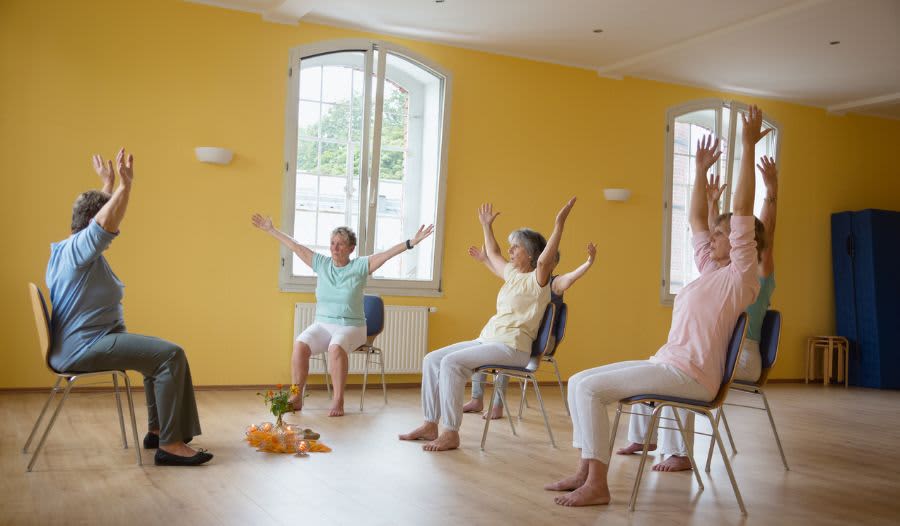
 Table of Contents